
Can a Marquee Go on Patio, Decking or Artificial Grass?
A marquee may be possible on a patio, decking or artificial grass, but the surface name cannot confirm suitability. The supplier needs to assess the proposed structure, what supports it, how it would be secured and whether the installation can respect the property’s restrictions.
For an Essex garden party, the useful first decision is whether you have enough information for an initial review or need further checks before the supplier can recommend a setup. This guide explains what to record, which questions matter for each surface and when to leave the preferred position unconfirmed.
Quick Answer
- Ask the marquee supplier to assess the actual location before committing to it. A flat, attractive surface is not evidence that the intended installation will work there.
- Pause if the proposal relies on unapproved drilling, staking, weights or attachment to another structure. Do not prepare those arrangements yourself.
- For a patio, describe the paving, its known construction, condition and any restriction on penetrating or marking it.
- For decking, flag the supporting structure and any uncertainty about its condition or capacity. For artificial grass, identify the base and installation details where known.
- Send a surface plan, photographs and access information. Ask what remains unresolved and whether an inspection or other specialist input is needed before quotation.
What This Guide Can Help You Decide
You can use this checklist to describe your garden accurately and ask better questions. It cannot approve a deck, specify an anchoring system, calculate ballast or promise that a finish will remain unmarked. Those decisions need information about the particular property and marquee.
Keep three stages distinct: your preferred position, the supplier’s assessment and the installation arrangement that is actually agreed. An enquiry photograph belongs to the first stage. It should not be treated as confirmation of the other two.
If the ground is also sloping or irregular, use the separate guide to uneven and sloping marquee sites for that additional question. Here the focus is the surface construction and the information needed to assess it.
When to Pause and Request Further Assessment
Leave the installation position unconfirmed if its suitability depends on missing structural information, an unresolved fixing method or permission that has not been obtained. A site visit may help, but ask whether other records or specialist checks are needed as well.
Take particular care with unknown services beneath the proposed work area. HSE’s guidance on avoiding underground services describes planning and locating services as parts of a safe system of work. An old sketch or an absence of visible covers should not be treated as permission to penetrate the surface.
Do not investigate by probing, drilling or lifting coverings. Give the supplier the information you have and identify what is uncertain. Refer visibly unsafe structures or immediate hazards before approaching them for measurements or photographs.
Three Questions to Resolve About Every Surface
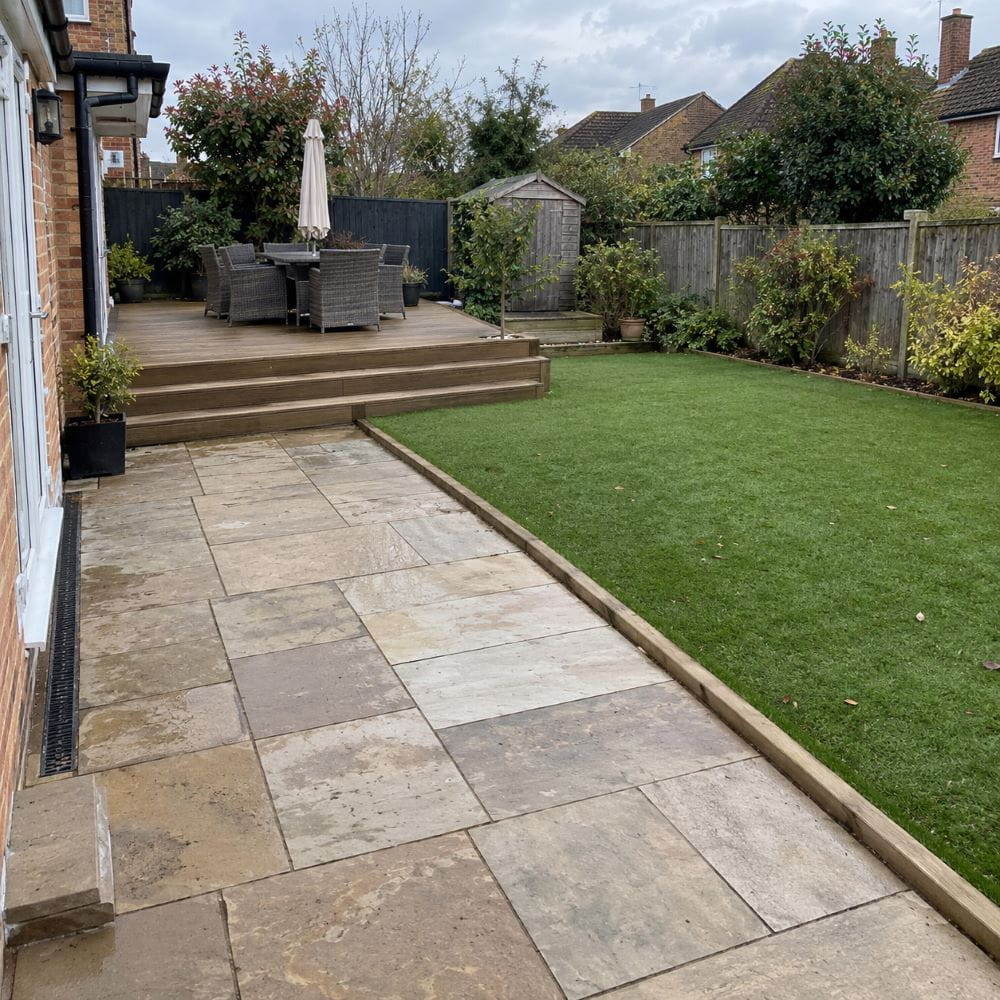
Can the supporting ground or structure carry the proposed installation?
The Health and Safety Executive’s event site assessment guidance calls for checking floor or ground load-bearing capacity and conditions at structural anchoring points. That distinction matters when the visible finish tells you little about its support.
For your enquiry, describe both what you can see and what you know lies beneath it. If you know only that the garden has composite boards or artificial turf, say so. Do not turn a guess about the construction into a statement that the area is suitable.
How would this particular marquee be secured?
Anchoring depends on the structure and the site. UK industry guidance from MUTA explains that ballast used where ground penetration is unavailable needs calculation, and that anchorage should follow the manufacturer’s instructions. A suggestion to use weights therefore needs a designed arrangement, not a household estimate.
Ask whether the supplier can offer an appropriate installation on your surface, including any space needed outside the covered area. Do not assume that another company’s photograph shows a method available for the marquee you intend to hire.
What protection and permissions would the arrangement need?
Ask separately about protection of the finish and permission for any proposed work. Write down restrictions such as no drilling, no lifting paving and no adhesive on the decking. Ask the supplier to explain whether those conditions can be met before accepting a proposal.
A protective covering should not be treated as proof of structural suitability or a guarantee against damage. Discuss what it is intended to protect, which areas it covers and what limitations remain. Include the equipment route as well as the party area.
Putting a Marquee on a Patio
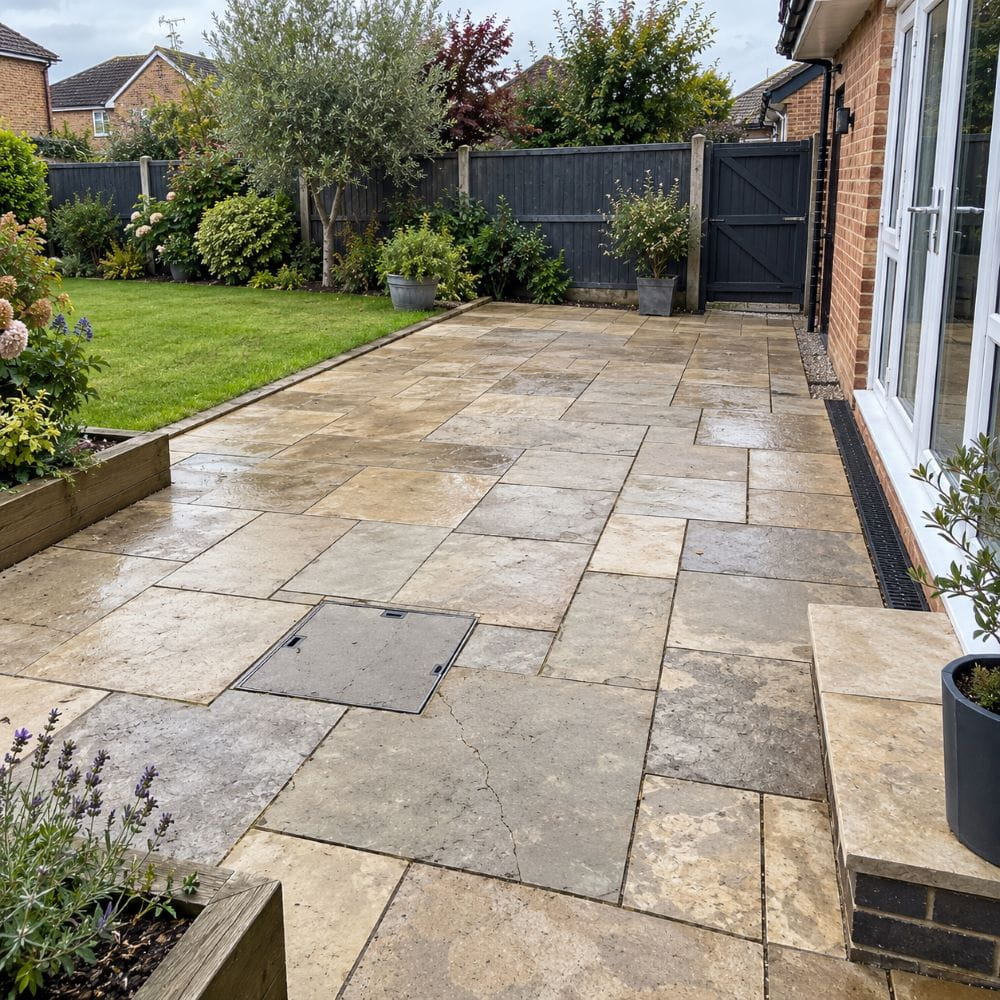
Start by identifying the surface accurately. Natural stone slabs, porcelain paving, block paving and a concrete area are different descriptions, so use the one you know. If you cannot identify the material, provide photographs and any paperwork from the installer instead of guessing.
Describe the patio’s construction and condition
Look for existing installation records showing how the patio was built. These may help the supplier decide what further information to request. Do not lift slabs or investigate beneath them just to complete an enquiry.
- Mark the proposed covered area and any adjacent lawn, beds, walls or steps.
- Show visible inspection covers, drainage channels and changes in paving.
- Report slabs that you already know are loose, cracked or moving.
- Identify recent repairs or landscaping and state whether their construction is documented.
- Note where water has collected during previous rain, without trying to diagnose the cause.
Photograph a concern in context as well as close up. A close view of a cracked slab is more useful when the supplier can also see whether it sits in the proposed marquee position, beside an entrance or along the delivery route.
Make restrictions clear before discussing a fixing method
If penetrating the patio is prohibited, state that at the first enquiry. The supplier can then consider whether the structure and site have a suitable alternative. The restriction does not itself establish that ballast is possible.
Do not assume that paving joints are available fixing points, or offer to drill holes in advance. If a proposed position depends on using adjacent ground, include that ground in the assessment and confirm who controls it. Your patio dimensions alone do not describe the whole installation area.
For a rented property or managed venue, obtain the relevant owner’s restrictions in writing. A general permission to hold a party may leave questions about temporary structures, alterations and surface protection unanswered.
Putting a Marquee on Decking
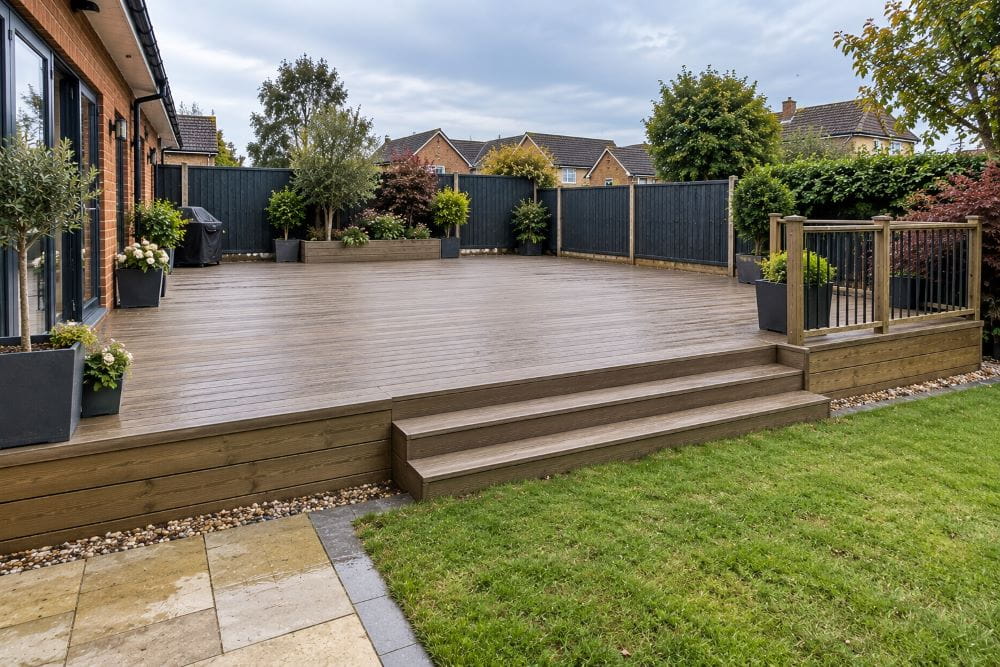
Decking needs a discussion about the supporting structure, not just the board finish. Tell the supplier whether it is raised, whether drawings or installation records exist, and who may be able to explain its construction.
Provide records rather than testing the deck yourself
Information about the deck’s design and present condition can help the supplier decide whether a competent structural assessment is needed. The fact that people have used it for ordinary garden furniture does not establish suitability for the proposed event installation.
Do not jump on the boards, place trial weights or go underneath an unsafe deck to investigate. Report concerns you already know about, including movement, damaged boards or previous repairs. Leave testing and structural conclusions to competent professionals.
- Photograph the deck as a whole, showing edges, stairs and the connection to the garden.
- Identify which part you want covered and which part guests would use for access.
- Share existing plans, installer details or documented restrictions if available.
- Explain whether anyone has changed the deck since those records were prepared.
- List intended uses such as seated dining or dancing, without calculating a capacity yourself.
Keep load support and anchoring questions separate
Even if a deck’s capacity has been reviewed, ask how the marquee would be secured. Conversely, a possible anchoring arrangement does not answer whether the deck can carry the proposed loads. The assessment needs to address both.
Do not offer railings, balustrades, fence posts or the house as attachment points. Describe nearby features so the supplier understands the space, but leave any proposed use of an existing structure to an appropriate assessment and the owner’s agreement.
If the supplier cannot establish a suitable arrangement on the deck, ask whether another area can be assessed. Moving the party position is an option to investigate; it is not confirmation that the alternative lawn or patio will work.
Putting a Marquee on Artificial Grass
Describe artificial grass as an installed surface with a base to investigate, rather than assuming it behaves like a natural lawn. Ask the turf installer or property owner what construction records are available and whether any restrictions apply to temporary structures.
Find out what is known about the installation
Useful questions concern the supporting base, any membrane or underlay, edge details and how the turf is secured. These are questions about your installation, not an assumption that every artificial lawn has the same layers.
If the turf covers an existing patio or deck, make that clear. The visible grass finish does not remove the need to assess the construction beneath it. Where the base is unknown, label it unknown and ask how that uncertainty should be resolved.
- Share any installation specifications, care instructions or relevant warranty restrictions.
- Photograph visible joins, edges, covers and changes to adjoining surfaces.
- Report known repairs, lifting edges or areas where water collects.
- Identify known buried services or irrigation information separately from the turf plan.
- State any objection to punctures, adhesives, temporary coverings or surface disturbance.
Do not pre-select pegs or weights
Green appearance is not a reason to push a stake through the surface. Equally, avoiding punctures is not enough to justify placing weights on it. Ask the marquee supplier to assess the method alongside the turf information and your protection requirements.
Discuss possible marks or changes to appearance before booking. Ask what protection is proposed and what outcome is being promised, if any. Do not assume that compression, cleaning or recovery will be straightforward for your particular product.
Where care instructions are unclear, refer the specific question to the turf installer or manufacturer. The marquee supplier and surface specialist may need to exchange information before either can give a useful answer.
Which Assessment Should You Request?
You have a clear description with no known unresolved restriction
Send it for an initial review and ask whether it is sufficient for a proposal. No known problem is useful information, but it is not the same as a completed suitability assessment.
The supplier needs construction or permission information
Identify who can provide it: the property owner, patio or turf installer, deck designer or venue manager. Ask exactly what is needed so you can obtain a relevant answer instead of another general photograph.
The plan depends on an improvised solution
Pause and refer the issue back to the supplier. Do not offer to add homemade weights, alter the deck, remove paving or change the anchoring arrangement to preserve a preferred layout. Ask whether a different position or event arrangement should be considered.
Prepare a Surface Brief the Supplier Can Assess
1. Draw the whole proposed installation area
Use a simple sketch to label each surface and the boundary between them. Add approximate dimensions with units and distinguish measurements from estimates. Show the house, gates, steps and the route from the intended unloading point.
If the proposed marquee crosses from patio to artificial grass or from decking to paving, mark the join clearly. Do not assume that approval for either surface separately covers an installation spanning both. Ask the supplier to review the complete position.
2. Pair observations with supporting information
For each surface, record what you have seen, what documents explain and what remains unknown. A short record might say: porcelain patio; installation invoice available; base specification not yet found; owner prohibits drilling. That is more useful than calling the area suitable hardstanding.
Keep photographs labelled to match the sketch. Include wider views so the supplier can understand relationships between features. There is no need to hide an awkward corner or damaged patch to make the enquiry look more promising.
3. Explain the intended use and delivery constraints
Provide the event date, location, guest estimate and activities. Mention gates, steps and any route that crosses the surface under review. The marquee setup and enquiry FAQs explain that access and ground conditions affect installation planning.
Use the traditional marquee hire overview to frame the service enquiry. MBC Hires describes garden installations as subject to suitable access and ground conditions. That statement should not be read as acceptance of every patio, deck or artificial lawn.
4. Ask for the unresolved decisions to be identified
Ask whether the proposed position can be assessed from the information supplied, what further checks are needed and when the supplier can confirm the installation arrangement. Request clarification of any assumptions attached to a quotation.
For example, an illustrative garden may offer a documented patio where drilling is prohibited and a raised deck with no design records. The useful comparison is which unanswered questions each option presents. Neither should be selected solely because it looks flatter or is closer to the kitchen.
Common Mistakes That Leave the Surface Question Unresolved
- Sending only a close-up of the finish. Add the surrounding area and access route so the photograph has context.
- Calling a surface strong because it feels firm. Describe the observation without turning it into a load-bearing conclusion.
- Assuming a previous gazebo proves suitability. The proposed marquee, installation and event use still need review.
- Agreeing on decoration before installation space. Ask which areas must remain available for the supplier’s arrangement.
- Leaving protection expectations unstated. Explain restrictions before accepting the proposal, especially on a newly installed finish.
- Substituting a different position on delivery day. Report the change and allow the supplier to reassess it before work proceeds.
Keep the Agreed Surface Plan Current
Tell the supplier about new landscaping, repairs, surface movement or changes to the access route after the initial review. Send an updated sketch if the proposed position changes. Keep the same agreed information available to the person receiving the delivery.
Consider guest movement in wet conditions as well as the structure itself. HSE’s advice on weather, lighting and slips notes that rainwater can create hazards on some surfaces and poor lighting can conceal them. Discuss entrances and surface transitions with the supplier, particularly for an evening event.
Review the site information and equipment-use conditions alongside your quote. The published terms call for accurate ground and underground-service information and prohibit interference with installed equipment. Report a concern during the hire rather than moving fixings, weights or the marquee yourself.
How to Get This Done
Prepare your surface sketch, labelled photographs, known construction details and restrictions. Add the event date, postcode, estimated guests, intended activities and equipment access information. Highlight the questions you could not answer.
Then send your proposed surface details for review to MBC Hires. Ask whether the preferred location needs an inspection or specialist information before a marquee can be quoted, and which aspects of any proposal remain conditional.
Confirm the agreed position, surface restrictions and preparation responsibilities before making changes to the garden. If the location cannot be accepted, use the supplier’s explanation to assess another option.
Summary
Patio, decking and artificial grass each need an assessment of the actual construction, installation method and site restrictions. Record what is known, identify uncertainty and let the supplier determine what further checks are necessary. A useful enquiry makes the surface question clear before the event depends on a particular answer.
Frequently Asked Questions
-
Can I have a marquee on a patio without drilling?
Possibly, if the supplier can provide a suitable arrangement for the structure and location. Make the no-drilling restriction explicit. Do not assume that weights or adjacent ground provide an acceptable alternative until assessed.
-
Can a marquee be secured to my decking railings?
Do not treat railings as ready-made anchor points. Any proposed attachment needs appropriate assessment of the marquee, existing structure and permissions. Ask the supplier about the complete securing arrangement.
-
Will a marquee damage artificial grass?
No general guide can promise an unmarked result. The answer needs the turf specification, proposed installation and protection arrangements. Discuss your expectations and relevant care restrictions with the supplier before booking.
-
Does adding flooring make any surface suitable?
No. Flooring is not blanket approval of the underlying ground, decking or anchoring arrangement. Ask what the proposed flooring is intended to achieve and which structural or surface questions still need assessment.
-
Are photographs enough, or will I need a site visit?
Photographs can support an initial review, but may leave construction, condition or fixing questions unanswered. Ask the supplier whether an inspection, installation records or specialist input is needed before the proposed position can be confirmed.
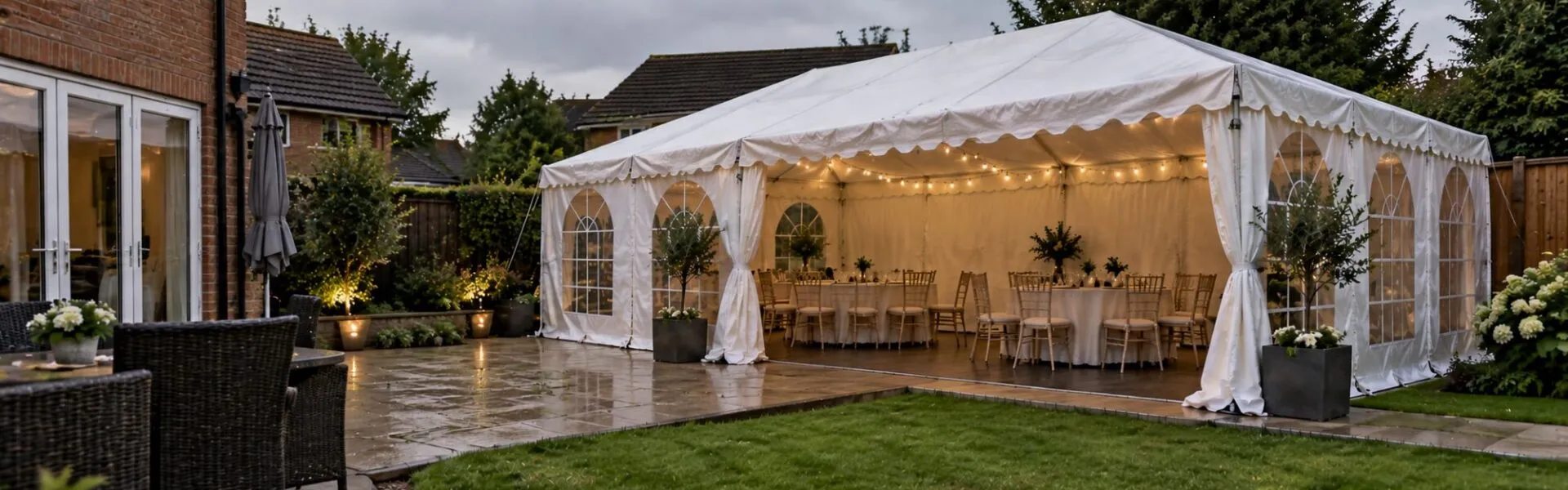
NOT SURE IF YOUR GARDEN SURFACE IS SUITABLE?
Patio, decking and artificial grass can each raise different questions about positioning, support and securing a marquee. Explore MBC Hires’ marquee hire and provide details of your proposed setup so the location can be considered as part of your enquiry.