
Garden Party Marquee Planning Checklist for Essex Homes
A garden marquee can give a party a defined place to gather, eat, talk and enjoy music. The best starting point is not choosing extras or trying to guess an exact marquee size. It is building a clear picture of the event: how many people are expected, what they will do, which part of the garden is genuinely usable and what details a hire company needs to assess the plan.
This checklist is for homeowners planning a private garden party in Essex who want to make a well-prepared marquee enquiry. Work through the guest plan, the space, the furniture and music requirements, then the weather and access questions. The aim is to give the hire company a clear event brief and identify what still needs a site-specific answer.
Quick Answer
- Confirm suitability before committing: pause the booking decision if the ground, access or intended placement has not been assessed by the hire company.
- Describe your guests and activities: record the expected attendance and whether the party centres on dining, conversation, speeches or music.
- Identify usable space: note the area you hope to cover, plus entrances and routes guests will need to keep using.
- Choose purposeful hire items: list the seating, tables and audio that support the event rather than assuming every extra is necessary.
- Raise weather and access questions: explain what rain, wind, wet ground or a restricted route could change.
- Send one clear enquiry: include the date, location, guest estimate, event timings and the points you need confirmed.
What This Checklist Does Not Solve
A planning list is useful because it separates decisions you can make now from decisions a supplier needs to assess. It cannot confirm whether a particular marquee will fit, whether a specific date is available, what equipment will be appropriate, how a structure would be installed or what the final cost will be. Those are details for the enquiry and quote stage.
Use this checklist to prepare the brief behind the event. The marquee-size guide covers the separate sizing question in more detail, while the hire company should confirm the right arrangement for the real site and guest plan. Neither a general checklist nor a size example confirms that an individual garden is suitable.
When to Pause or Ask for a Site Check
Do not treat this checklist as a site survey or a sizing calculator. Exact marquee size, placement, suitability, availability and price depend on the actual event and location. If the ground, access, guest plan or weather arrangements are unclear, pause the booking decision and ask the hire company for project-specific advice before making assumptions.
Define the Party Before Choosing Equipment
Two parties with the same number of guests can need very different layouts. A relaxed afternoon gathering where people mainly stand and move between the garden and house has different priorities from a birthday party with a meal, speeches and music later in the evening. Before looking at equipment, write down the purpose of the event in one sentence. For example: a family lunch with seated dining, a drinks reception with occasional seating, or an evening celebration where music is central.
Set a working guest number
Start with the number you expect, then record the uncertainty around it. It is useful to separate invited guests, likely attendees and anyone expected to join later. This is not about producing a perfect final number weeks in advance. It is about avoiding a plan that only works if every assumption is right.
Also note the people whose needs affect the layout. That may include older relatives who need a place to sit, young children who should not be expected to stand in a busy area, or guests arriving after a meal when the use of the space changes. A guest list is therefore not just a headcount. It is a guide to how the party will occupy the garden.
Describe the event flow
Think about the order in which guests will use the space. Where will they arrive? Will everyone eat at once? Is there a point where tables become less important and a social or music area becomes more important? Will people move regularly between the house, garden and marquee? These questions help prevent a layout that looks tidy on paper but becomes congested once the party begins.
Keep the plan simple. You do not need a formal event drawing to explain that guests will arrive for drinks, sit for food and then gather around music later. That single sequence already tells a supplier more than a vague request for “a marquee for a garden party”.
Which Planning Route Fits Your Event?
Before you make contact, test the plan against these five questions.
- Guest plan: Do you know the expected number of people and the main activities?
- Space plan: Have you identified the usable area, the routes to keep clear and any obvious constraints?
- Comfort plan: Have you decided what seating, tables and music support the way guests will use the party?
- Weather and access plan: Have you recorded the practical questions rather than assuming they will resolve themselves?
- Enquiry plan: Can you explain the event in a few clear sentences, with the date, location and what you want to achieve?
Pause at this point if you are relying on an exact size, placement or cost that has not been confirmed. This is the right time to ask for advice, not the point to make the plan look more definite than it is. A short list of unknowns is useful. It allows the hiring company to assess what needs a site-specific answer.
- Meal-led gathering: prioritise the seating plan, table use and the route for serving food. Explain whether everyone needs to eat together.
- Informal afternoon party: describe where guests will socialise and who needs a seat. Consider whether a smaller hire list would meet the occasion.
- Mixed dining and entertainment: record when the activities change and which areas need to remain available. Ask the supplier to assess the proposed layout.
- Unresolved site constraint: pause the equipment choice. Ask about a site check, a different usable garden area, a simpler event format or an alternative venue if the original plan cannot be accommodated.
Assess the usable garden space
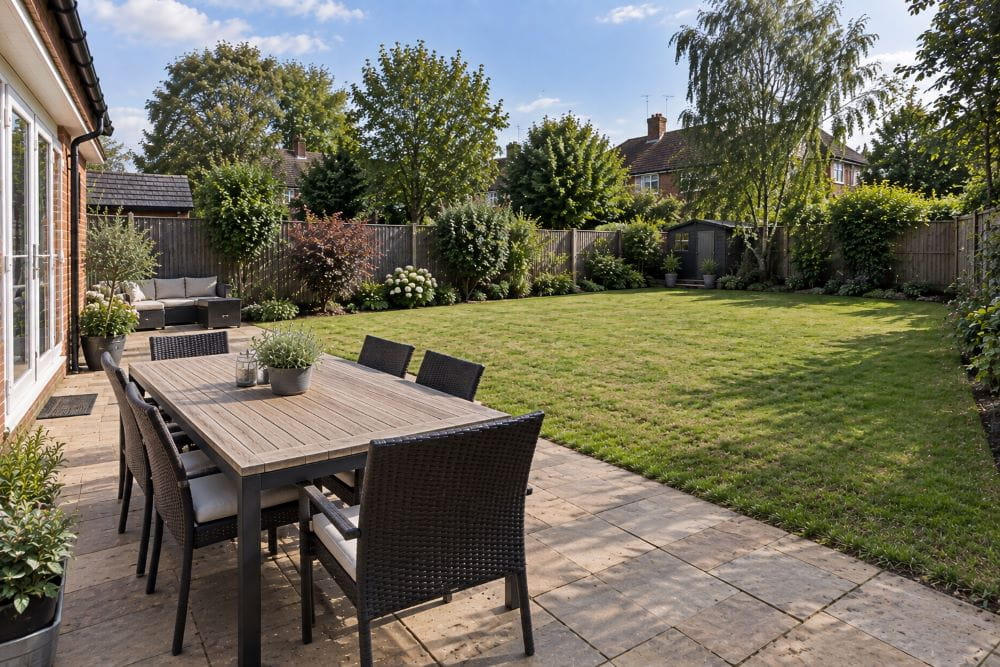
Walk around the garden as if the party were already taking place. The usable area may be smaller than the area visible from the house. Steps, planting, uneven patches, garden furniture, doors, narrow routes and places people naturally need to pass through can all affect the practical layout. Record the areas you want to keep clear as well as the area you hope to use.
Separate event space from circulation space
A common planning mistake is to allocate every available part of the garden to tables or standing guests. People still need to enter, leave, use the house, carry food and move around one another. Make a note of the route from the access point to the garden and the route guests will use most often. If either route feels narrow before the event begins, it needs to be discussed rather than ignored.
Think about the garden in zones rather than in exact dimensions. You might need a main covered area, a route to the house, a place for food or drinks, a quieter seating area and a clear entrance. This approach gives you a better brief without pretending to make a technical site assessment yourself.
Identify constraints early
Take note of anything that may need checking: changes in level, fixed garden features, trees, narrow side access, gates, a patio or decking area, delicate planting or a route shared with neighbours. A constraint is not necessarily a reason to abandon the event. It is information that should be provided before a recommendation is made.
If you are unsure whether a surface, route or garden feature affects the setup, include it in the enquiry and, where helpful, provide clear photographs. Do not assume that a structure can be positioned in a particular place just because that place appears open. A site-specific answer is safer and more useful than a confident guess.
Choose furniture around what guests need to do
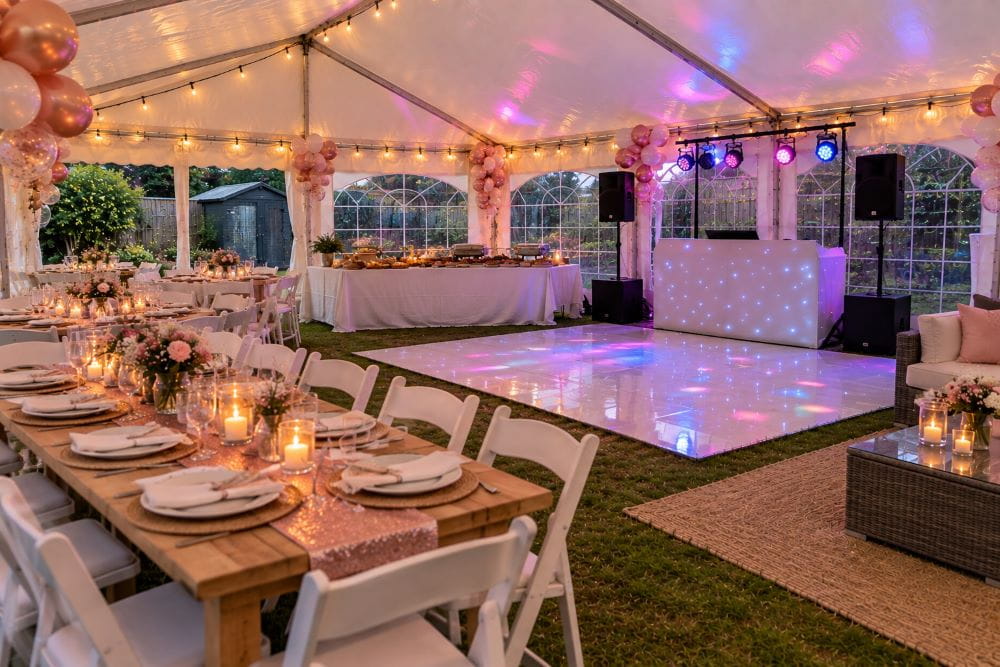
Furniture should support the party plan, rather than becoming an afterthought once the marquee has been discussed. Start by deciding whether the event needs seated dining, occasional seating, a place for gifts or food, or a more open social layout. You may need several of those functions, but they do not all need the same amount of space at the same time.
For a meal-led party, the key question is whether everyone needs a seat together. For a drinks-led party, the question may be where people can put a drink down and where guests who prefer to sit can be comfortable. For a mixed event, decide which activity has priority at each stage. You can then explore event furniture for the planned layout with a much clearer idea of what is actually required.
Keep dining and social space distinct where possible
When people are eating, they need a layout that allows them to sit and move without constantly interrupting one another. When the meal is over, the same area may become a social space. Decide in advance whether furniture will remain in place, be moved or simply be less central later in the day. This changes the conversation from “how many tables?” to “how will the party use the garden over time?”
Do not add furniture simply because it seems standard for an event. Each item should have a role: seating guests, supporting food and drinks, defining a dining area or making the space more comfortable. If you cannot explain the role, leave it off the first enquiry and ask for guidance rather than creating a cluttered plan.
Plan music without letting it take over the party
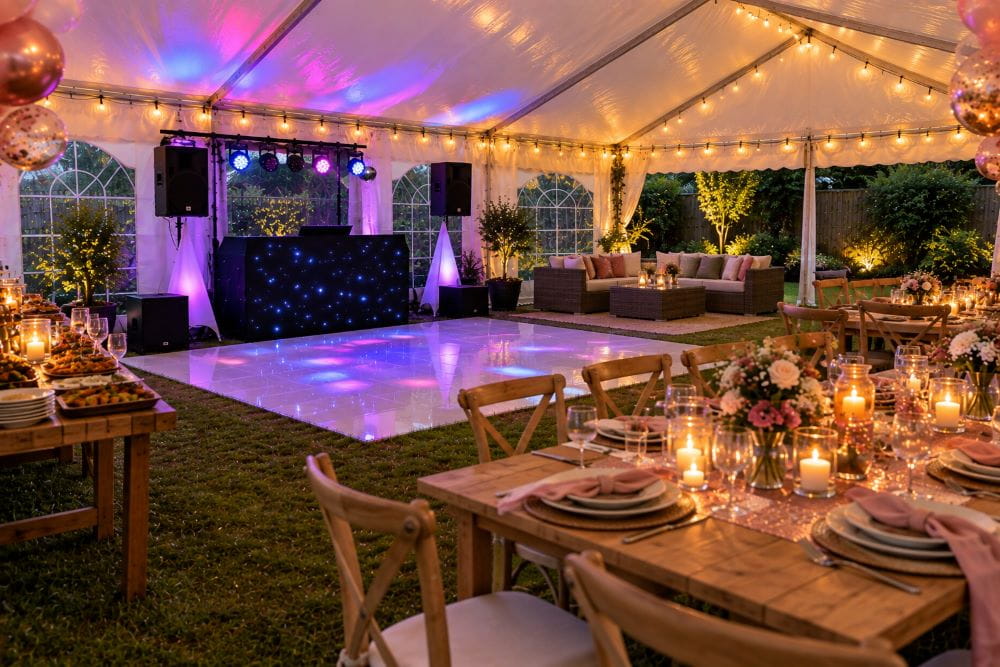
Music needs to fit the event, the guest list and the available space. Decide whether you need background music, speeches, a playlist, a DJ or a combination. This determines what information to share with the audio supplier, but it does not mean every party needs a full entertainment setup.
For speeches, announcements or a curated playlist, consider whether speaker and PA hire for speeches or music would support the plan. If the event includes a dedicated music period, you can also discuss DJ hire for a party music setup. In either case, tell the supplier when music will be used, where guests will gather and whether the priority is atmosphere, speeches or dancing.
Be realistic about the balance between music and conversation. If the party is mainly a family meal, a music area should not make dining difficult. If dancing is the focus later in the day, reserve a clear area for it instead of hoping a dining layout will automatically convert. Consider your neighbours and event timing early, and check any local requirements that may apply to your plans.
Build a weather plan that protects the event flow
Weather planning is more than deciding whether you would prefer cover. Think about what rain, wind or a wet garden would change for guests. Would they need a covered place to arrive, wait, eat or move between the house and the main event space? Would a wet route make shoes or flooring a concern? Are food, gifts or decorations currently planned for an exposed area?
Make a simple “if the weather changes” list. Keep it practical: which activities move under cover, which route do guests use, where do coats or bags go, and what is the backup for food or music equipment? Avoid assuming a specific weather solution is included with any hire. Raise the conditions and priorities with the hire company so that the discussion is based on the actual event rather than a generic promise.
Check access before you settle on a layout
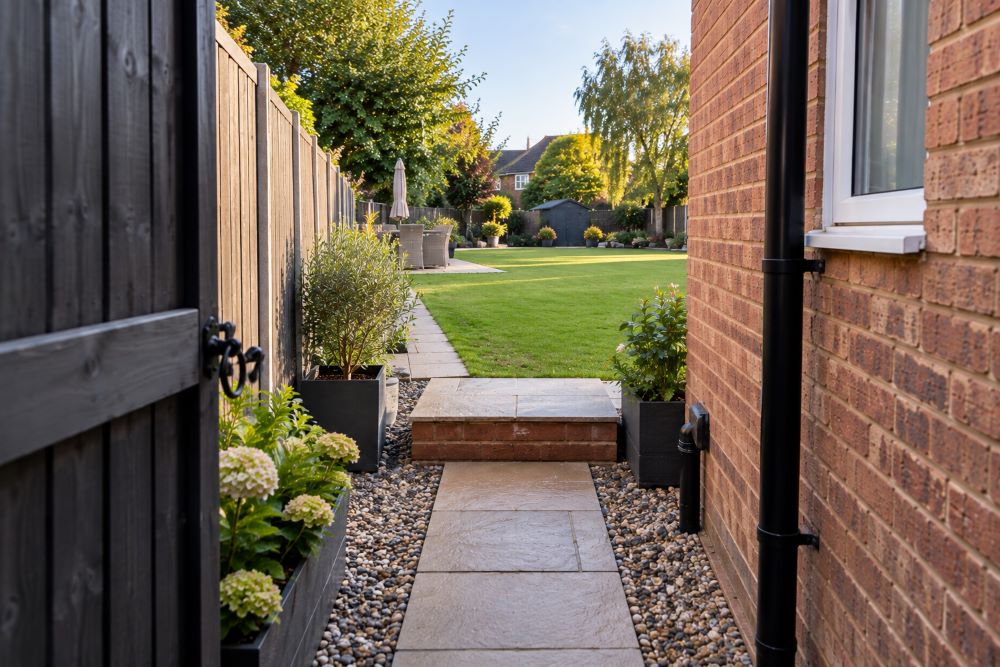
Access is often the detail that changes an otherwise good garden-party plan. Consider how equipment would reach the garden, how clear the route is and whether there are gates, side passages, steps or obstructions that need to be mentioned. Also consider guest access. A route that works for one person walking through the garden may not work comfortably when several people are arriving, carrying drinks or moving between activities.
Do not move obstacles or make alterations solely on the assumption that they will be required. Instead, list them. The useful enquiry is one that says where the event will be held, how the garden is reached and what you are uncertain about. That gives the supplier the opportunity to ask for the right follow-up information.
Prepare an enquiry that can be assessed properly
A useful enquiry gives the hire company the information it needs without trying to prescribe an unverified solution. Include the event date, Essex location, expected guest number, approximate timings and the type of party. Add the activities you are planning, such as dining, informal drinks, speeches or music. Then list any important site details, including access restrictions, changes in level or areas you are unsure about.
It is also helpful to state the hire categories you are considering, even if you do not yet know the exact items. You might say that you need cover for a garden party, seating for dining and advice about music. If cost is part of the decision, review pricing for the relevant hire services first, while remembering that the final quote depends on the requirements of the event.
Common garden-party planning mistakes
- Starting with a product name: Begin with the guest experience and practical site details, then discuss the hire arrangement.
- Using the whole garden on paper: Preserve routes, entrances and the areas guests need to move through.
- Planning only for the meal: Consider what happens before and after dining, especially if music or socialising continues.
- Assuming the weather plan is obvious: Write down the changes you would make if conditions affect the garden.
- Leaving access until the end: Mention gates, paths, steps and obstructions in the first enquiry.
- Guessing the final cost: Use pricing guidance as a starting point and allow the actual event requirements to shape the quote.
Keep the plan useful as the event develops
A garden-party brief does not need to be fixed from day one. Guest numbers may change, the schedule may become clearer, and you may decide that dining is less important than a relaxed social layout. Keep one current version of the plan with the date, guest estimate, garden notes, activities, and hire questions. Update that instead of sending separate, conflicting details.
When something changes, explain the effect rather than only the change itself. For example, an increased guest number may affect seating; a later finish may affect the music plan; a change of garden area may affect access. This makes it easier to review the event as a whole and reduces the risk of an early assumption becoming an unnoticed problem.
How to Get This Done
Complete the checklist, take a few clear photos of the usable garden area and access route, then write a short enquiry that covers the date, location, guest estimate, party format and questions you need answered. MBC Hires can discuss a suitable garden marquee arrangement based on the details of your event.
Do not wait until every detail is perfect. The aim is to give enough information for the right questions to be asked. If you are unsure about the site, size, access or suitable setup, say so clearly and request a recommendation rather than presenting a guess as a decision.
Ask the proposed quote to identify the hire items and quantities, agreed event and installation timings, access assumptions and anything that still needs a site-specific answer. When your brief is ready, send the event date, location and setup details. Include your unanswered questions so the recommendation can address them.
Summary
Good garden marquee planning begins with the way guests will use the event, then tests that plan against the garden, furniture, music, weather and access. A clear brief will not answer every site-specific question, but it will make the next conversation far more productive. Confirm what you know, flag what you do not know and let the final hire recommendation be based on the actual event.
Frequently Asked Questions
-
What should I include when asking about garden marquee hire?
Include the date, location, expected guest number, event timings, main activities and any access or garden details you are unsure about. Mention whether you are considering seating, tables, speakers or DJ hire so the enquiry reflects the whole event.
-
Do I need to know the exact marquee size before I enquire?
No. It is more useful to explain the guest plan, usable garden space and intended activities. The exact size and placement should be confirmed for the real site and event requirements rather than guessed from a general checklist.
-
Should I plan seating before I ask about the marquee?
Plan the role seating needs to play, such as dining, occasional seating or a social area. You do not need to finalise every item before enquiring, but this helps you explain how the space will be used.
-
What if I am worried about rain or garden access?
Include those concerns in the first enquiry. Explain the route, surface or weather-related issue and ask for project-specific guidance. Do not assume that a particular setup or weather measure is available without confirmation.
-
Can I add speakers or a DJ to a marquee party?
MBC Hires offers speaker and DJ hire. Whether either is suitable for your event depends on the party format, timings and the way guests will use the space, so include those details when you ask.
READY TO PLAN YOUR GARDEN MARQUEE?
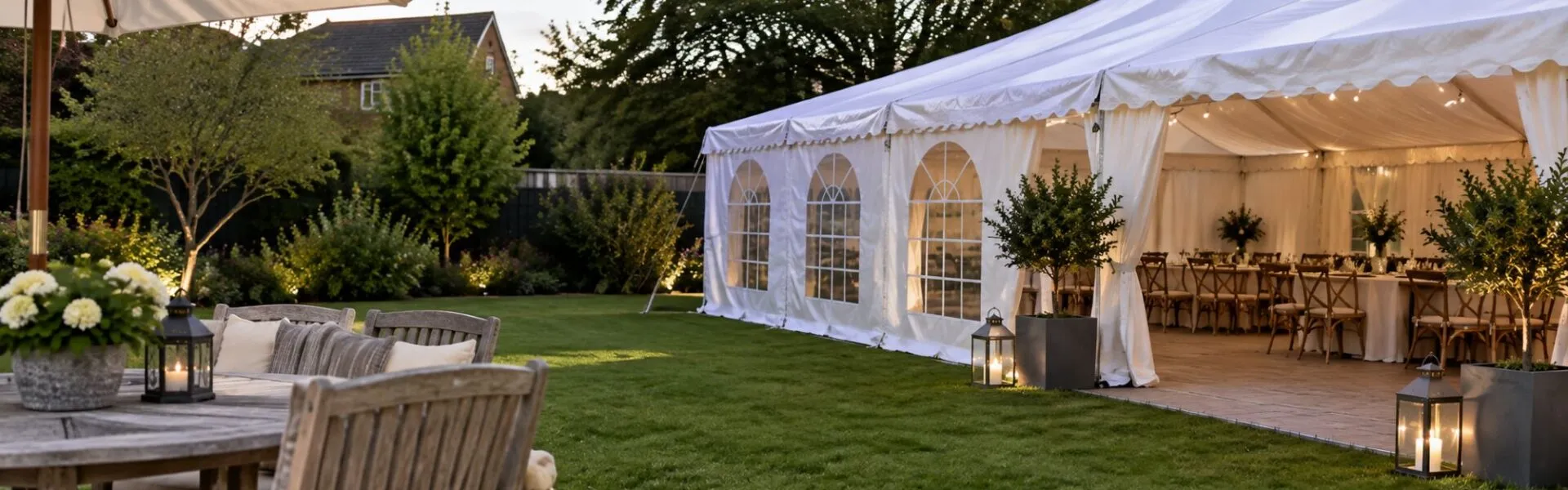
Planning a garden party involves more than choosing a marquee size. Your guest numbers, seating, event layout, garden access and available space can all affect the setup. MBC Hires provides marquee hire for events across Essex and can help you discuss a suitable arrangement based on your garden and event plans.