
What Extras Do You Need with a Garden Marquee?
The extras you need with a garden marquee depend on what guests will do inside it. A seated meal needs a different furniture plan from an afternoon of drinks, and a party with a DJ raises different questions from a gathering with occasional background music.
Start with the jobs each item must do: give guests somewhere to sit, support food service, provide a place for drinks or deliver the entertainment you have planned. Then check what you already have and what your booking includes. This makes the hire list easier to explain and helps you avoid ordering two items for the same purpose.
Quick Answer
- Confirm suitability before committing: pause any choice that depends on unresolved space, access, guest needs or electrical arrangements, and ask the relevant supplier to check it.
- Choose furniture around the activity: distinguish seated dining, buffet service, standing drinks and places to rest before deciding quantities.
- Check existing items and inclusions: identify what you own, what another supplier provides and what is already listed in the quote.
- Separate audio equipment from entertainment: speaker hire and a DJ service answer different needs; confirm the DJ’s sound provision before adding separate speakers.
- Prioritise useful extras: retain items needed for the agreed event and guest comfort, then consider optional presentation choices within your budget.
What This Guide Does Not Decide
This guide helps you shortlist extras for a private garden marquee event in Essex. It does not calculate marquee size, approve a seating layout, specify electrical equipment or confirm whether a structure can be installed on your garden surface. Those decisions need the actual site and proposed equipment.
It also cannot confirm stock for your date or the contents of an individual booking. Treat the list of available hire types as a starting point for an enquiry. The written quote should identify the items and services being supplied.
When to Pause the Selection
Get advice before finalising extras if the furniture would narrow an entrance, obstruct a guest route or leave someone without suitable seating. Explain any mobility or other access requirement specifically; a chair’s appearance alone does not establish whether it meets a guest’s needs.
For sound and lighting, pause if the power supply, equipment protection or cable arrangements are unresolved. Ask the equipment supplier to assess the proposed setup and involve a competent electrical professional where needed. Being inside a marquee is not, by itself, confirmation that an electrical arrangement is suitable.
Tables: Start with Their Job
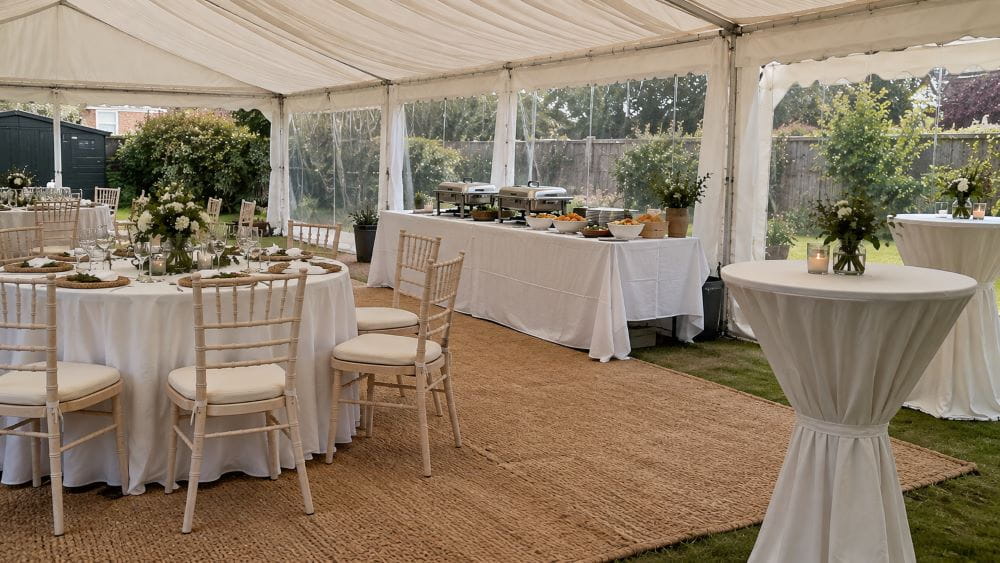
A table for dinner, a buffet table and a place to put drinks have different demands. Write down these uses separately, even if you hope that one table can serve more than one purpose during the event.
The current round, trestle and cocktail table options cover several event formats. Choose a shortlist by use, then ask about the dimensions and quantities appropriate to your arrangement.
Round tables for seated dining
Round tables are an option for guests eating in smaller groups. Think about the meal itself: individual place settings, shared dishes and any centrepiece all form part of the proposed use. Ask how the available table and chair combination would work for that meal.
Do not decide how many people a table will seat from its shape or a photograph. Confirm the specific dimensions and proposed seating with the supplier, including space for chairs to be used and guests to move between tables.
Trestle tables for dining or service
Trestle tables can suit banquet arrangements, buffets and service areas. Separate guest seating from food service in your list: a table allocated to a buffet is not also an available dining table while the buffet is in use.
If you plan to place serving equipment on a hired table, describe it before booking and ask about suitability and any protection requirements. A general furniture listing does not establish compatibility with a particular appliance or load.
Cocktail tables for standing drinks
Cocktail tables are useful to consider for a standing reception or informal drinks area. They provide a different function from tables at which guests sit down for a meal.
Include places to rest as a separate decision. A standing format does not mean every guest will want or be able to stand throughout. Check the available table’s intended use rather than assuming ordinary dining chairs can be paired with it.
Chairs: Plan for People and Timing
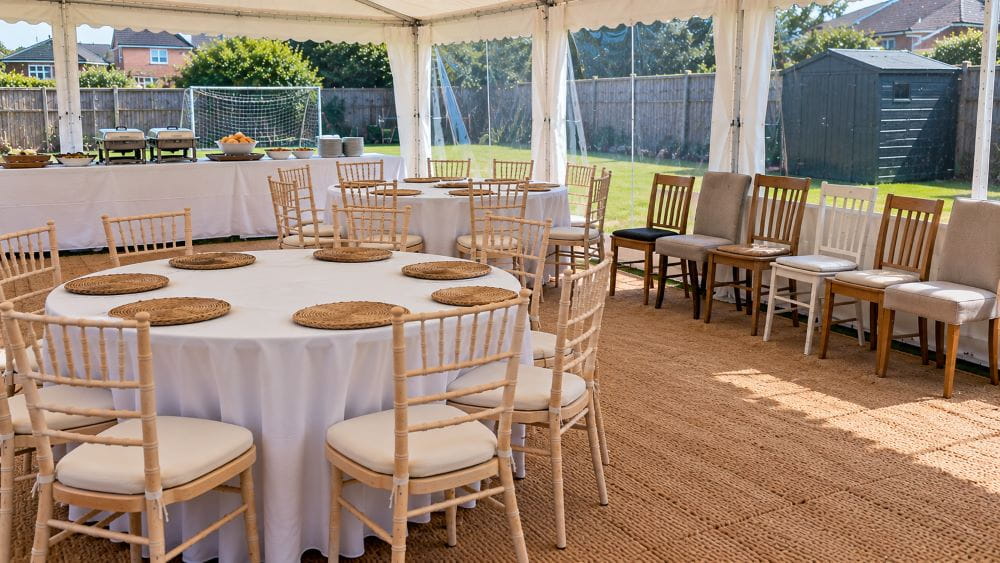
For a meal at which everyone sits together, plan a suitable seat for each person eating at that time. For a less formal event, consider who needs a seat, how long guests will stay and whether seated activities occur later. There is no useful universal chair percentage for every garden party.
The listed Limewash Chiavari chairs for events are one option to discuss. Confirm the details that matter for your guests and chosen tables. Do not infer cushion choices, specialist support or child suitability from the style name.
If you intend to use some household chairs, make an actual inventory. Check their condition, intended setting and suitability for the proposed tables. Tell the supplier which seating you are providing so the requested hire quantity represents the remaining requirement.
Distinguish chairs available during dinner from chairs you intend to use elsewhere at the same time. Moving the same seating between activities may be possible, but only count on that once the timing and responsibility for the move are agreed.
Speakers and a DJ: Establish the Difference
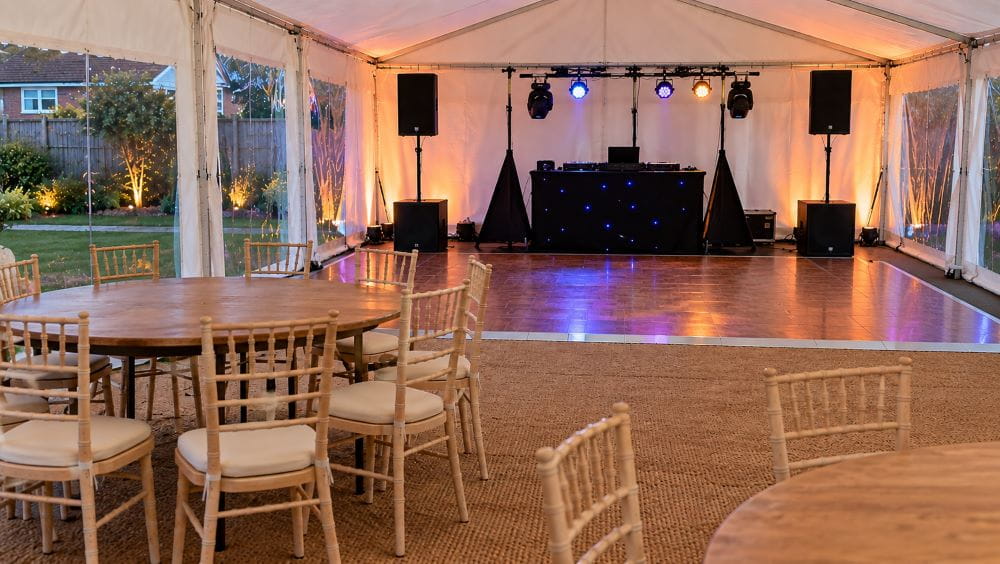
First describe the outcome you want. Background music during drinks, announcements, and an evening focused on dancing are different briefs. The guest number helps, but it does not explain where people will be or what they need to hear.
When to discuss speaker hire
If you are arranging the music or spoken content yourself, speaker and PA hire for your event is a relevant starting point. Explain the intended use and who will operate the system.
Ask which equipment, connections, and setup support the proposed hire includes. If you need a microphone or want to connect a particular playback device, say so explicitly. Neither should be treated as an automatic inclusion simply because a service offers audio equipment.
When to discuss a DJ
If you want someone to provide the music entertainment, discuss DJ hire for a garden marquee party. Give the event format, music preferences and the parts of the party for which you want the DJ.
The advertised DJ service describes sound and lighting. Before ordering separate speakers, establish what sound equipment is included in your proposed DJ booking, where it will be used and when it will be available. Extra audio should answer a confirmed additional need.
Entertainment lighting and lighting for guests to see their surroundings serve different purposes. Ask what each proposed arrangement covers, particularly if guests will use the garden after dark. Do not assume the DJ’s lighting illuminates entrances, dining areas or the route back to the house.
Other Marquee Options to Confirm
MBC Hires also lists solid flooring, carpet, full interior lining and event lighting as optional marquee extras. Consider these against the planned use, site and presentation you want, with the supplier confirming what is appropriate and included.
Ask about flooring and carpet together so you understand the proposed arrangement; do not assume that choosing one automatically includes the other. Similarly, establish the purpose and extent of any lighting provision before treating it as a complete solution.
Keep these questions separate from furniture quantities. An optional finish does not resolve an unsuitable site, and a photograph of a dressed marquee does not identify every item included in its hire price.
A Decision Framework for Each Extra
Use the same six questions for every item on your shortlist. The aim is to give each proposed extra a clear purpose and identify anything that still needs checking.
- Purpose: which guest activity or practical requirement does this item support?
- Timing: when is it needed, and does that overlap with another intended use?
- Existing provision: is a suitable item already available from you or included in another booking?
- Quantity: what confirmed requirement supports the number requested?
- Suitability: has its proposed position, access and relevant guest or equipment requirement been checked?
- Responsibility: who supplies it, sets it up, uses it and deals with any planned change during the event?
If an extra has a clear purpose and a confirmed gap to fill, include it in the enquiry. If it is mainly a presentation preference, label it optional so you can assess its cost separately. If suitability or responsibility remains unclear, pause that decision and record the question for the supplier.
Example: a meal followed by music
For this illustrative party, start with dining places and any separate food-service tables. Then identify what happens when the meal finishes. If the entertainment needs an area occupied by furniture, ask whether a workable arrangement can be agreed before assuming guests will simply move everything aside.
Where a DJ is being booked, check the included sound before adding a speaker order. A second system might have a separate purpose, but the reason should be explicit, such as a distinct activity at another time or location that the proposed DJ provision does not cover.
Example: informal drinks and conversation
For a gathering with no seated meal, begin with somewhere for drinks and suitable places to sit. A full dining arrangement may not serve the planned event. Conversely, choosing a standing format does not remove the need to consider guests who would prefer seating.
Discuss amplified sound only if it has a defined role. Optional presentation choices can then be considered without turning an informal gathering into a larger entertainment booking by default.
Build the Hire List in a Practical Order
1. Describe the busiest part of the event
Write a short description of what guests will be doing when the most activities overlap. This might be eating while food is served, or socialising while music starts. Use that description to identify items required at the same time.
Keep the description factual. “Everyone eats together, with a separate buffet” gives a clearer furniture brief than “a relaxed party”. Atmosphere matters, but it cannot replace the practical requirements.
2. Separate the inventory from the wish list
Create three lists: items you can provide, items another supplier has confirmed, and items you want quoted. Put uncertain inclusions on a question list instead of counting them as available.
For each item you already own, check that it is available for this event and suitable for the intended use. An item promised elsewhere or needed in the house is not part of the marquee inventory at that time.
3. Check combinations and simultaneous uses
Review tables with chairs, food service with dining, and audio with the entertainment booking. Ask the supplier to check combinations where compatibility or space is uncertain. Show any intended furniture positions on a simple sketch if it helps explain your questions.
Count a shared item once only when its uses occur at different times, and the change is practical. If the plan relies on clearing a table, moving chairs or reconnecting equipment, identify who has agreed to do that work.
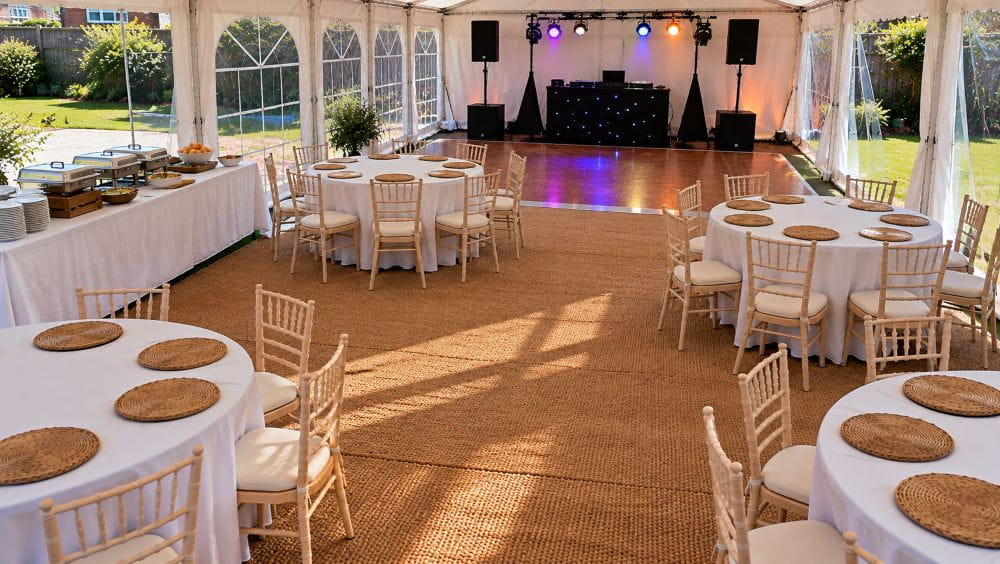
4. Request an itemised proposal
Ask for the proposed quantities and service inclusions in writing. Separate the core arrangement from optional additions so you can assess what each choice contributes.
Compare proposals against the same event brief. A lower total is difficult to interpret if one version includes a service or item that another leaves out. Resolve the difference before deciding which arrangement meets your needs.
Common Mistakes When Choosing Extras
- Starting from a styled photograph: it can help communicate an appearance, but it does not establish the package contents, item quantities or suitability for your garden.
- Using the guest total as the whole brief: tell the supplier how many people will dine together and which other activities need furniture.
- Allocating the same table twice: check whether food service, dining and other uses overlap before assuming one item covers them all.
- Ordering speakers before checking the DJ quote: confirm the included equipment and its intended coverage first.
- Adding furniture wherever a gap appears: leave guest movement and access in the discussion; empty space can have a necessary purpose.
- Treating every extra as essential: distinguish an item needed for your event from an optional choice about appearance.
Keep the List Accurate as Plans Change
Update the hire enquiry when the guest count, meal format or entertainment changes. Explain the change itself rather than simply increasing every quantity. Extra evening guests, for example, do not necessarily create the same dining requirement as extra guests at the meal.
Keep one current version of the item list and identify who has confirmed each inclusion. This helps prevent an earlier quote, a later email and a separate supplier booking from being treated as if they describe the same arrangement.
Before the event, reconfirm the agreed items, timing and responsibilities with the relevant suppliers. Check the process for requesting changes and whether proposed additions are available. Do not treat a tentative enquiry or your own revised list as a confirmed booking amendment.
How to Get This Done
Use the furniture range for your marquee event to identify relevant options. Furniture is hired by individual item, with quantities and availability confirmed for the event; do not assume a standard furniture package.
To request a proposal from MBC Hires, send your event details and extras shortlist. Include the date, postcode, expected guests, dining format and any access information. State which furniture or audio items you already have and whether a DJ or another supplier is booked.
Ask the reply to distinguish proposed items, quantities, service inclusions and optional additions. Raise unresolved questions about compatibility, space or power before accepting the arrangement. Your next decision is whether the proposal covers the event you described, with clear responsibility for each part.
Summary
Choose garden marquee extras by purpose, timing and confirmed need. Tables and chairs should support the way guests eat and socialise; audio should match the entertainment brief. Check existing provision and DJ inclusions before adding equipment, and keep optional finishes separate from essential requirements.
A useful shortlist explains what each item will do, how many are needed and which questions remain open. Use it to obtain an itemised proposal, with supplier confirmation wherever suitability or setup is uncertain.
Frequently Asked Questions
-
Are tables and chairs automatically included with marquee hire?
Do not assume they are included. Check the written quote for the actual items and quantities. Furniture can be hired individually, so explain your dining and seating requirements when asking what should be supplied alongside the marquee.
-
Do I need a chair for every guest?
If everyone will sit down to eat together, plan a suitable seat for each diner. For an informal gathering, base seating on the activities, duration and individual guest needs. Avoid using a fixed percentage without considering who will attend.
-
Can I use my own furniture and hire only the missing items?
Furniture is offered by individual item, which allows an enquiry for the items you need. Tell the supplier what you intend to provide and check its suitability and compatibility. Confirm availability for the requested hire quantities before relying on them.
-
Should I book speakers as well as a DJ?
Check the DJ proposal first. The listed DJ service describes sound and lighting, but the exact equipment and use must be confirmed for your event. Request additional speakers only when you have identified a need that the agreed provision does not cover.
-
Which extras should I remove if the quote exceeds my budget?
Begin with optional presentation choices and any confirmed duplication. Keep the requirements for the agreed activities, suitable seating and safe guest movement in view. If those do not fit the budget, discuss a simpler event arrangement with the supplier before removing necessary items.
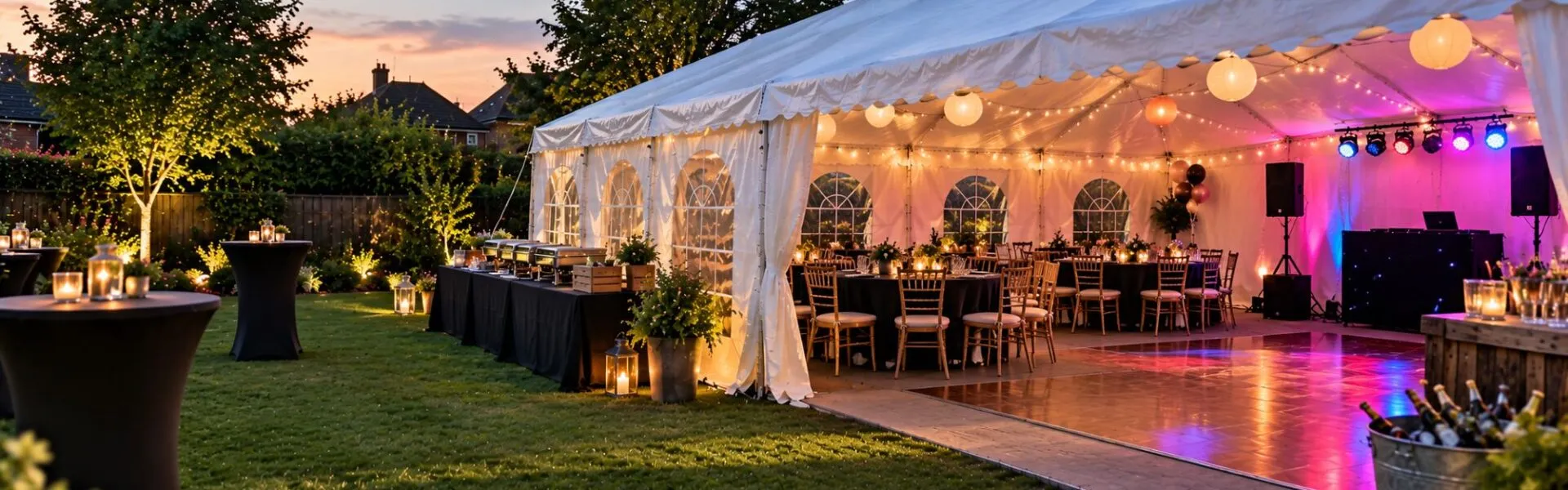
NEED EXTRAS FOR YOUR GARDEN MARQUEE?
Once you know how guests will eat, sit and socialise, you can identify the furniture you actually need. Explore MBC Hires’ furniture range to compare tables and chairs for your garden marquee, then include the relevant items and quantities in your event enquiry.